Augmented & Virtual Reality (AR/VR)

Description
Help people step insidethe experience
AR and VR makeyour message easier to explore, because the audience is not only watching. Theyare participating. A customer can place a product in their own room, a buyercan walk through a space that has not been built, and a visitor can hold astory rather than read a label.
From productpreviews and virtual walkthroughs to museum installations and trainingenvironments, we design AR and VR solutions that make interaction feel naturaland useful. The technology stays in the background. What people remember is theexperience.
Retail and Product AR
Let customers view, try, or understand products in their own space before they decide. Augmented reality removes the guesswork from size, fit, finish, and placement, which shortens the path to a decision and reduces returns.
Real Estate and Space Visualization
Create virtual walkthroughs for properties, venues, exhibitions, and planned environments. Buyers and tenants can move through a space at any hour from anywhere, and developers can show a finished result long before construction ends.
Cultural and Museum AR
Bring stories, objects, and heritage spaces to life through guided interactive layers. Visitors point a device at an artefact or a building and the context appears around it, which is particularly useful where the object cannot be touched or moved.
Immersive Entertainment and Training
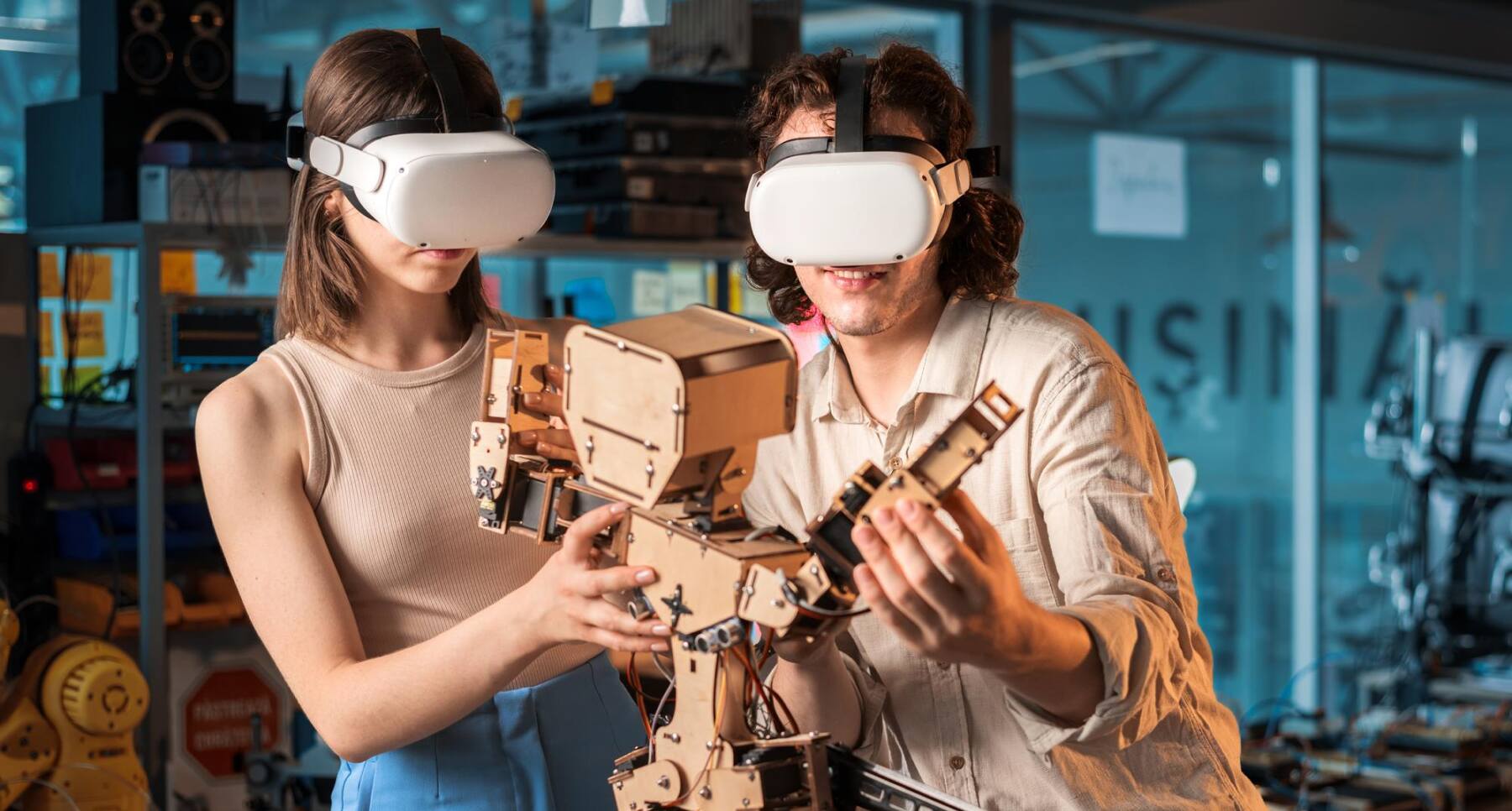
Build interactive experiences for learning, gaming, events, and audience engagement. Virtual reality is well suited to training in situations that are expensive, rare, or unsafe to stage in real life, and to events where the experience is the attraction.
Built around the audience, not the hardware
A lot of AR andVR work fails because it starts with a device. We start with the person, whatthey need to understand, and where they will be standing when they use it. Theplatform is chosen afterwards, and sometimes the answer is that AR is not theright tool at all.
As an AR and VRdevelopment company in Pakistan, we keep design and engineering in the sameteam, so what is promised in the concept is what gets built. We also plan forthe practical side early: device access, connectivity, lighting conditions, andhow the experience is supported once it is live.
Every projectstarts with a short conversation about the outcome. If AR and VR solutions arethe right fit, we will show you why. If something simpler will do the job, wewill say that instead.
Answers to the Questions Asked
Whether you areexploring how AR and VR could work for your business or looking for practicaldetail before you commit, here are the questions we are asked most often. Ifyours is not covered, get in touch and we will answer it directly.
Augmented reality adds digital content to the real world through a phone, tablet, or headset, so you still see the room around you. Virtual reality replaces it entirely with a digital environment. AR suits products and places. VR suits training and full immersion.
Retail, real estate, healthcare, education, tourism, culture, entertainment, events, and training can all use AR and VR, provided the experience genuinely improves understanding or engagement. The technology works best where something is hard to explain, hard to picture, or not yet built.
It depends on the project. Many AR experiences run on an ordinary phone or tablet with no app download required, which keeps them accessible to a wide audience. VR usually needs headsets or dedicated hardware, so device access is planned from the start.
Yes. We can plan integrations with websites, apps, product data, booking tools, learning platforms, or internal systems where needed. This matters most for retail and training, where the experience has to reflect live stock, pricing, or user progress.
Most projects run between six and sixteen weeks, depending on how much 3D content is created and how many integrations are involved. A single product configurator moves faster than a multi room VR training programme. Content production is usually the longest stage.
Working locally means shorter feedback loops, on site testing in the actual venue, and a team in your time zone during build. It also means the content is designed with your audience, language, and context in mind rather than adapted from somewhere else.
Have a story people should experience?



.webp)